Report: Building the Clean Energy Workforce of Tomorrow
An analysis of 14 youth-inclusive clean energy workforce development programs across 10 countries, to identify global best practices for attracting youth to the clean energy workforce.
Why does youth workforce inclusion in clean energy matter?
The global clean energy transition is already generating unprecedented demand for skilled workers across the sector, from renewable energy generation to energy efficiency to grid modernization to heavy industries. Yet every year, millions of young people enter the labour market without access to the training, networks, or financial support they need to enter the clean energy sector. This research compendium maps 14 workforce development programs across 10 countries that are working to close this gap, to identify what works, for whom, and why.
Commissioned by the Clean Energy Ministerial’s Empowering People Initiative (EPI) and led by Student Energy, with funding from Natural Resources Canada, this report is intended to support policymakers and program implementers who are working to grow and support the future clean energy workforce. This report provides initial reflections and recommendations on what makes programs effective, and highlights gaps and opportunities for improved design and delivery.
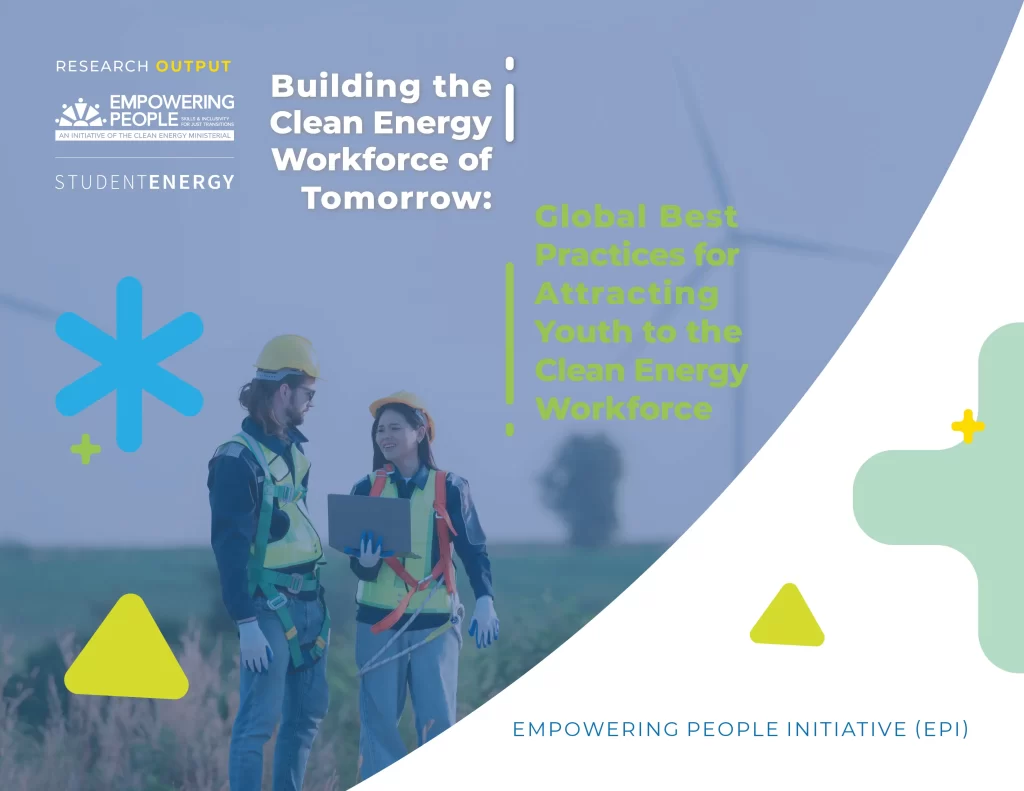
Report launch
Methodology
We used a mixed-methods approach across three phases, detailed below. While all program details in case study snapshots are sourced from publicly available documentation, we note that many of these programs are actively evolving, and that significant data gaps were identified across many programs. More consistent reporting on outcomes and impact metrics could support future researchers to better track long term outcomes evenly across case studies.
The 14 programs outlined as Case Studies were selected based on the following criteria:
- Launched or updated since 2020.
- Featured youth-targeted or youth-inclusive focus
- Tangible work-based learning or wage/apprenticeship supports
- Energy transition relevance
Three research phases

Phase 1
Literature Review & Program Review
Structured desk review of publicly available program documentation, drawn from program websites, calls for applications, evaluation materials, and impact numbers and reports.
A media scan was also conducted to identify news articles or commentary on the programs.

Phase 2
Practitioner Interviews
Supplementary interviews with program implementers, employers, and youth alumni to add qualitative evidence and contextual information to case study snapshots, from stories and anecdotes, to future program design recommendations.

Phase 3
Indicator Analysis & Synthesis
Select indicators were tracked across each case study using a standardized framework, then synthesized to surface patterns and themes.
Key Findings and Key Recommendations were developed, based on the themes that emerged from case study analysis and from broader national policy context on workforce development and climate action.
8 Program Design Features to Watch
Each program was assessed across six categories containing multiple indicators, to enable a standardized comparison and cover the range of factors that might contribute to a program’s effectiveness. From that initial pool, eight specific indicators have been selected to feature in the Case Study Snapshots throughout the report, representing the program features that appeared to be most relevant to programs’ effectiveness.
Where data gaps exist, they are noted explicitly and given a data confidence score. We also acknowledge that programs may be measuring or evaluating these areas internally without publicly reported data.
Wage subsidy or stipend
-
- Does the program provide a wage, stipend, or compensate youth during or after their participation in the program?
- Does the program provide a wage, stipend, or compensate youth during or after their participation in the program?
Employer Co-Investment (Financial)
-
- Do employers have a financial stake in the program, either contributing to program implementation costs, or by committing to hiring participants from the program?
- Do employers have a financial stake in the program, either contributing to program implementation costs, or by committing to hiring participants from the program?
Employer Co-Designed Curriculum
-
Do relevant employer organizations or coalitions participate in the design of the training program?
Equity Targets or Mechanisms
-
Does the program have any structural mechanisms or goals to increase the participation of underrepresented groups as relevant to their region, such as women, Indigenous youth, youth from rural and remote communities, etc.?
Wrap-Around Supports
-
- As an equity measure, does the program provide any kind of flexible or in-kind supports to offset costs or barriers for young people to participate in the program?
Formal or recognized certification
-
- Does the program provide any kind of industry standard certification or credential?
Procurement or Regulatory Mandate
-
- ·Is the program aligned with or connected to national or regional procurement processes, tender criteria, or regulatory mandates?
- ·Is the program connected to broader clean energy/climate policies or targets?
Post-placement Outcome Tracking
-
- Does the program track and report on medium or long-term outcomes for participants?
- Does the program track and report on medium or long-term outcomes for participants?
Traffic Light Rating
-
- Each of the 8 Program Design Features is given a traffic light rating, to indicate whether the program has this feature (🟢), does not have the feature (🔴), or partially includes it/has inconclusive evidence (🟡)
- Each of the 8 Program Design Features is given a traffic light rating, to indicate whether the program has this feature (🟢), does not have the feature (🔴), or partially includes it/has inconclusive evidence (🟡)
Keep up to date by following our socials


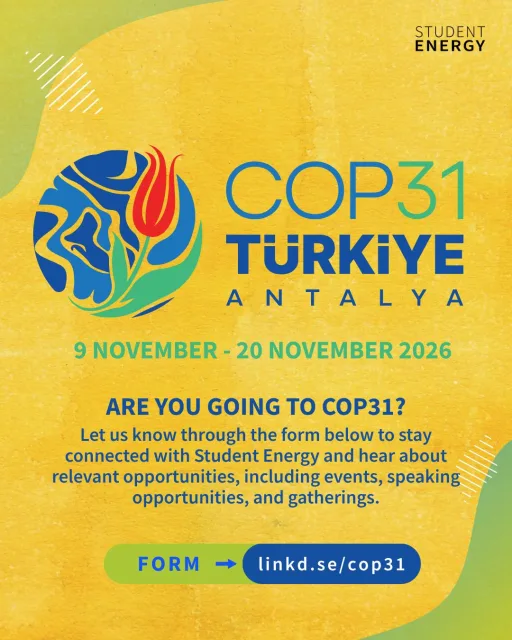
Will you be at COP31? Let us know!
Fill out the form and we'll share opportunities for youth on the ground, including events, meetups and speaking opportunities from Student Energy and our partners.
Sign up at linkd.se/cop31
#COP31 #StudentEnergy #EnergyTransition...
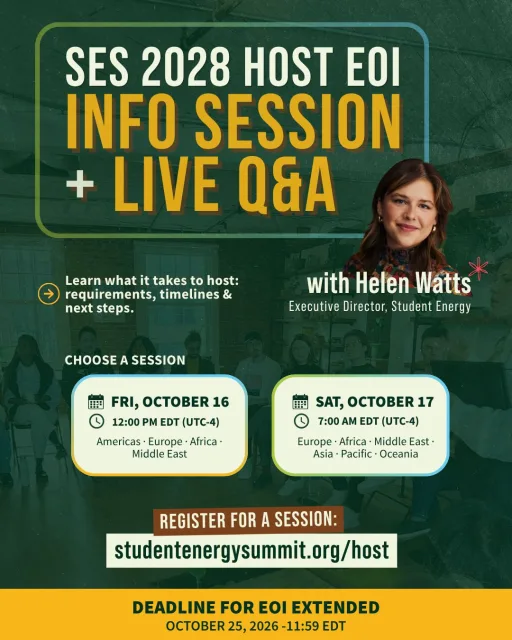
Did you know that Student Energy doesn't exactly plan the Student Energy Summit? Each summit is a unique vision put together by a team of young people across the world, and we provide the mentoring, training, and support that each team needs to successfully put together the summit.
If you're ...
Powered by